
You’re standing in the barber chair, and the barber asks what you want. You say “a fade,” and suddenly there are ten more questions coming your way. Taper fade or skin fade? Low, mid, or high? Guard number? This guide answers all of it, plain and simple, no guesswork attached.
By the end, you’ll know exactly which fade fits your face, your hair, and your lifestyle. Let’s get into it.
Taper Fade vs Skin Fade: Side-by-Side Comparison
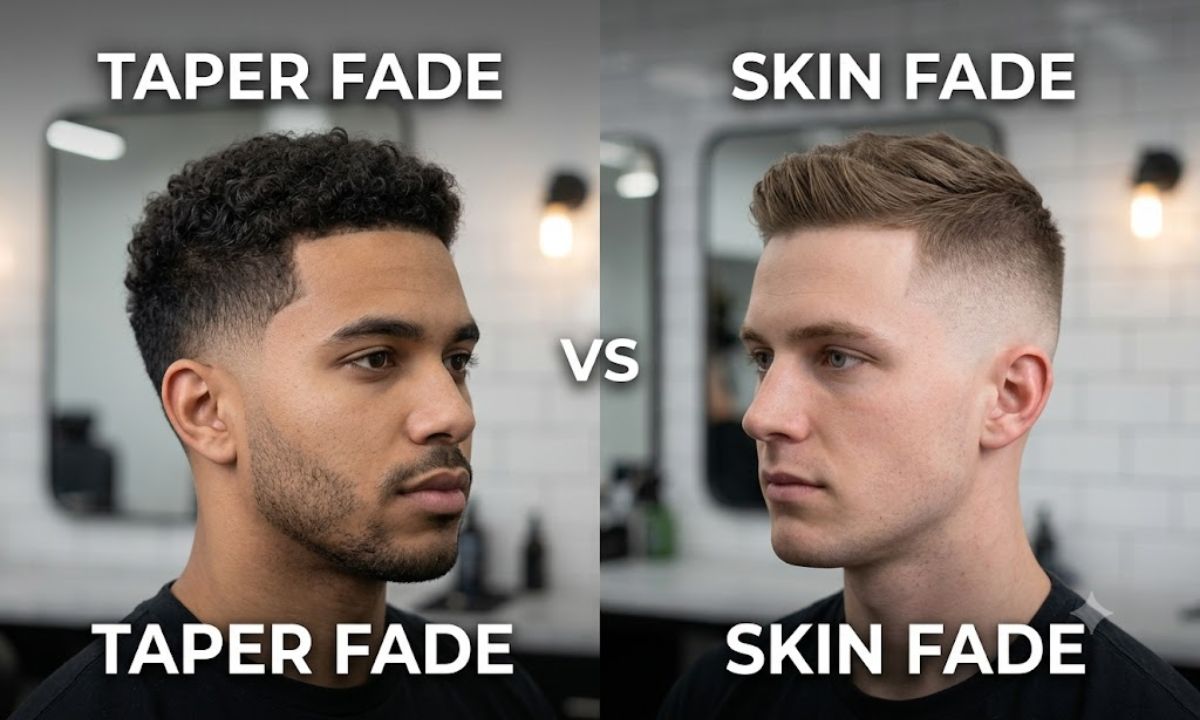
Here’s the short answer before we dig deeper. A taper fade keeps hair at the base, gradually shortening without exposing bare skin. A skin fade reaches bare skin at some point, usually near the neckline or temples. That’s the whole difference in one sentence.
| Feature | Taper Fade | Skin Fade |
|---|---|---|
| Shortest point | Short hair, not bare skin | Bare skin |
| Look | Soft, natural neckline | Sharp, defined neckline |
| Maintenance | Every 3 to 4 weeks | Every 2 to 3 weeks |
| Best for | Professional settings | Bold, modern styles |
| Grow out | Barely noticeable | Noticeable within days |
Both styles blend hair from long to short using clipper guards or a straight razor. The tools are similar. The finish is where they part ways.
What Is the Key Difference Between a Taper Fade and a Skin Fade?
People mix these two up constantly, and honestly, it’s an easy mistake. A taper haircut narrows the hair gradually along the sides and back without going bald anywhere. Think of it as trimming, not erasing. There’s always a layer of hair left, even at the shortest point.
A skin fade, sometimes called a bald fade, goes all the way down to the scalp. The barber uses a razor fade or a very tight clipper setting to create that bare patch. This creates a sharper hair gradient, one that goes from full hair to nothing in a short space.
So when someone asks about taper fade vs bald fade, this is the real answer. One keeps a whisper of hair everywhere. The other exposes skin at its lowest point. Neither is better. It just depends on the vibe you’re going for.
Low Taper Fade vs Skin Fade
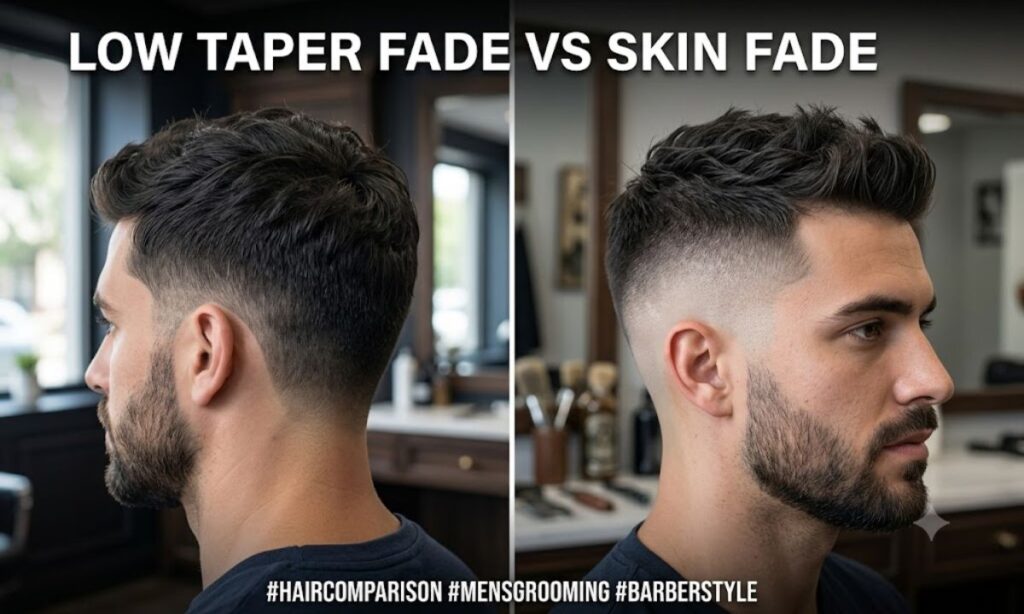
A low taper fade starts its blend just above the ears, keeping things subtle and close to the hairline. It’s the quiet option, ideal if you don’t want too much contrast between your top and sides.
A low skin fade, on the other hand, still starts low but drops to bare skin near the bottom. You get that clean bald neckline, but the fade itself stays modest and doesn’t creep up too high.
If you want something office-friendly but still sharp, low skin fade hits a nice middle ground. Compare that to a low taper fade, which leans more conservative and blends softer overall.
Mid Taper Fade vs Skin Fade
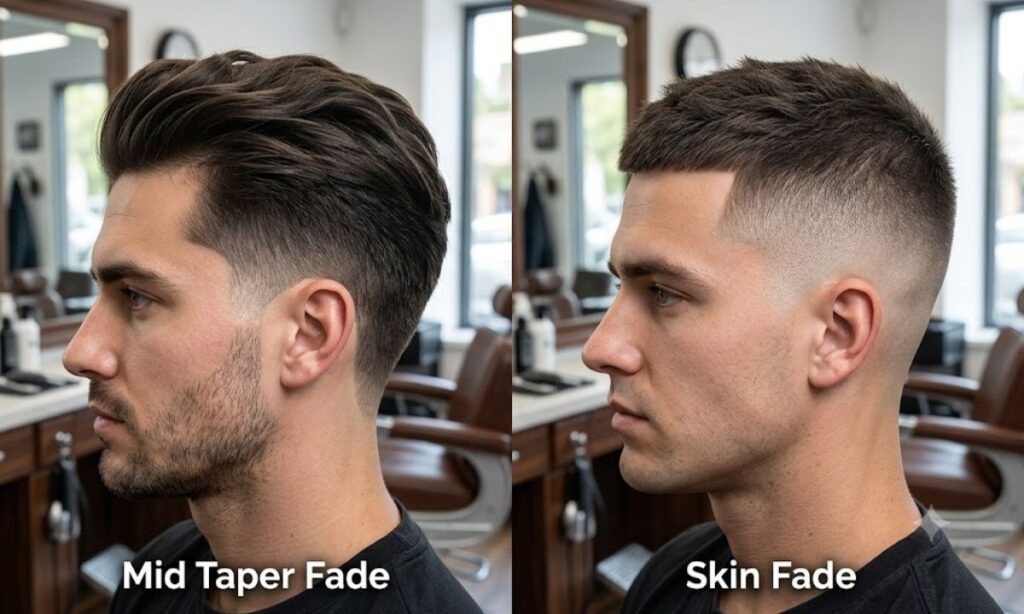
Move the starting point up to around temple level, and you’ve got a mid fade. A mid taper fade blends from mid-length hair down to short, again without touching skin.
A mid skin fade does the same climb but finishes with that bare patch near the ear or neckline. It’s more noticeable than a low fade, giving your haircut a bit more edge and definition.
This is often the sweet spot for guys who want a blended haircut with visible contrast. You get style without going full high-fade drama. A nice balance, really.
Which One Suits Your Face Shape?
Your face shape actually matters more than people realize when picking a fade. Round faces usually look sharper with a skin fade, since it adds height and structure.
Square or angular faces often do better with a taper fade, which softens strong jawlines. Oval faces can pull off almost anything, so this is where personal preference takes the wheel.
Long faces should avoid too much height on top paired with a super high fade. A low taper fade balances proportions nicely without stretching the face further.
Which One Suits Your Hair Type?
Hair texture changes how a fade looks once it grows in, and this part gets overlooked a lot.
Straight Hair
Taper fade for straight hair blends beautifully since the strands lie flat and smooth naturally. Skin fade for straight hair also works great, showing off that crisp line without much effort.
Curly Hair
Taper fade for curly hair helps control volume while keeping some length for texture on top. Skin fade for curly hair creates striking contrast, though curls can shrink and hide the fade faster.
Wavy Hair
Taper fade for wavy hair flows nicely with the natural movement, requiring less daily styling. Skin fade for wavy hair looks equally clean, but waves near the fade line need regular touch ups.
Thick Hair
Taper fade for thick hair removes bulk gradually, which helps thick hair sit better overall. Skin fade for thick hair thins things out fast and gives a bold, weightless finish up top.
Fine or Thin Hair
Taper fade for thin hair is forgiving, since there’s less contrast to manage near the base. Skin fade for thin hair can actually make hair look fuller by comparison, thanks to the sharp drop off.
What Is a Skin Taper Fade?
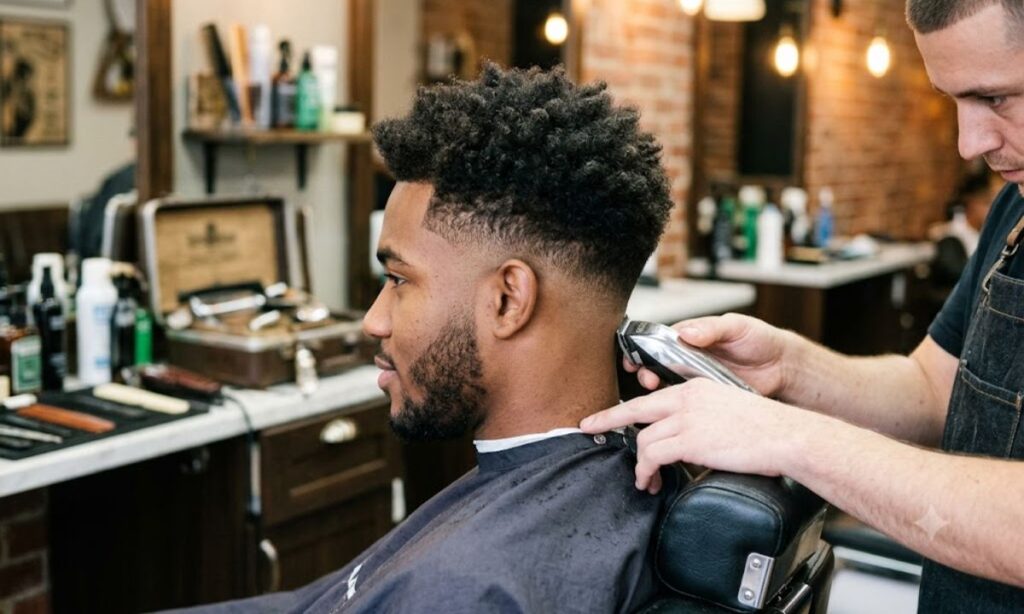
Now here’s where things get interesting, because this term confuses almost everyone. A skin taper fade, sometimes called a hybrid fade, blends both styles into one haircut.
Picture a taper fade on top that gradually transitions into a skin fade near the bottom edge. You get the soft, natural feel higher up, with that crisp bare skin finish right at the neckline.
This skin taper haircut has become popular because it offers the best of both worlds. Barbers love it too, since it gives them room to show off blending skills.
Which Requires Less Maintenance?
Let’s talk upkeep, because this often decides which fade you should actually pick.
A taper fade grows out slower and looks decent even a few weeks past your last cut. Since there’s no bare skin, the regrowth blends back in naturally without looking messy.
A skin fade needs more attention. That bare patch starts showing stubble within a week or so. Skin fade maintenance usually means visiting your barber every 2 to 3 weeks to keep it fresh.
If your schedule is packed or your budget’s tight, low maintenance fade haircut searches usually point straight to the taper. How often to get a taper fade redone? Roughly once a month works fine for most guys. How often to get a skin fade touched up? Plan on every two weeks if you want it crisp.
High Fade: Where It Fits Into the Picture
We’ve covered low and mid, but a high fade deserves a quick mention too. A high taper fade starts the blend way up near the crown, leaving a smaller area of longer hair on top.
It creates bold contrast and pairs well with textured styles, quiffs, or slicked back looks. A high skin fade takes that same starting point but drops straight to bare skin, making it the boldest option of the bunch.
Both versions demand more frequent trims since the shorter zone covers more of your head. If you love standing out, high fade styles rarely go unnoticed, in a good way.
What Should You Tell Your Barber?
Walking in with the right words saves you from a haircut you didn’t ask for. Don’t just say “fade.” Be specific about height, guard number, and finish.
Here’s what to mention:
- Fade height: low, mid, or high
- Fade level: taper, skin, or skin taper (hybrid)
- Clipper guard: #0 guard fade, #1 guard fade, or #2 guard fade for the top blend
- Neckline style: sharp neckline, natural neckline, or bald neckline
- Sideburns: connected, tapered, or left full
Bring a photo too. Words help, but pictures remove all doubt about what you actually want. Your barber will thank you for the clarity, and you’ll walk out happier with the result.
Burst Fade vs Regular Fade: A Quick Detour
Since we’re on the topic, it’s worth mentioning the burst fade haircut briefly. Unlike a standard fade that runs straight across, a burst fade curves around the ear like a sunburst.
It pairs well with longer top styles and mohawks, giving a rounder, more artistic finish. A drop fade is similar, curving down behind the ear instead of bursting outward near the top.
Both are creative spins on the classic fade haircut, worth asking your barber about if you want something different.
Taper Fade and Skin Fade for Black Men
Taper fade for Black men and skin fade for Black men both work incredibly well with coily textures. The contrast against coily hair or 4C hair tends to pop more, making the fade line look razor sharp.
A fade haircut for coily hair often pairs nicely with a defined top, like a curl sponge style or twists. Talk to a barber experienced with textured hair, since technique matters a lot here for a clean hair fade transition.
How Much Does Each Fade Usually Cost?
Price isn’t identical across the two, and it’s worth knowing before you sit down. A skin fade takes more time and precision, so barbers often charge a few dollars extra.
Razor work near the scalp is slower than a straight clipper blend down the sides. That extra time on the chair adds up, especially at shops that charge by the minute.
A taper fade usually costs the same as a standard barber haircut, since it’s quicker to execute. Over a year of regular visits, that price gap between the two can actually add up fast.
Does Grow Out Look Different Between the Two?
Grow out is where a lot of guys get caught off guard, especially with their first skin fade. A taper fade grow out stays fairly clean since there’s no bare patch trying to fill back in.
You might not even notice it growing until a few weeks pass, which is honestly convenient. Compare that to a skin fade grow out, where stubble on bare skin becomes obvious within days.
That stubble phase can look a little rough, especially against darker hair colors. If you’re not a fan of visiting the barber often, this alone might tip your decision.
What is the difference between a taper fade and a skin fade?
A taper fade keeps a short layer of hair everywhere, never touching bare skin. A skin fade goes all the way down to the scalp at its lowest point.
Is a taper fade good for professional settings?
Yes, absolutely. Taper fade professional settings are a common combo for office jobs and interviews. It stays sharp without looking too flashy, which most workplaces appreciate.
What is a zero fade?
A zero fade, often called a taper fade vs zero fade comparison point, uses a #0 guard for the shortest section. It’s not fully bald like a skin fade but sits close to it in terms of shortness.
Is a taper fade the same as a fade?
Not exactly. “Fade” is the umbrella term covering taper fade, skin fade, burst fade, and more. A taper is just one specific type under that wider fade family.
Which is better for Black men, taper fade or skin fade?
Both work great. It really comes down to personal style and how often you can visit the barber. Skin fade gives sharper contrast, while taper fade offers a softer, lower maintenance look.
Final Thoughts
Picking between a taper fade and a skin fade isn’t about which one wins overall. It’s about matching the cut to your face, your hair, and how much upkeep you’re willing to handle.
Try one, live with it a few weeks, and see how it feels. Worst case, you switch it up next visit. That’s the beauty of hair. It always grows back.
