
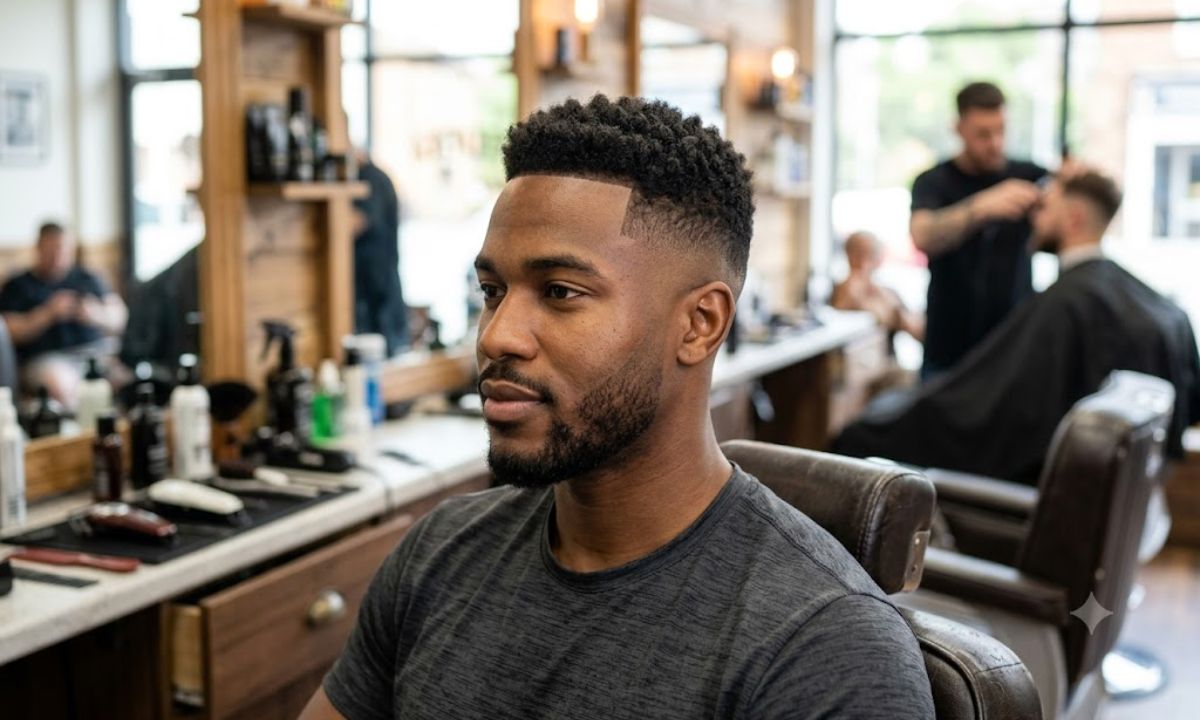
A fade is a gradual hair transition where the sides and back get shorter as they move down toward the skin. The top stays longer, and everything blends together without a hard line.
That’s really it. No mystery, no complicated barber jargon needed. If you’ve ever pointed at a photo and said “something like this, but blended,” you were basically asking for a fade.
What Is a Fade Haircut?
A fade haircut uses shorter sides and back paired with longer hair on top, and the whole thing is connected by a seamless blend. There’s no visible lines, just hair that quietly shrinks from full length down to skin or near skin.
Barbers create this with clipper guard lengths, switching numbers as they move down your head. A few guards up top, fewer in the middle, and often a bare skin finish or stubble finish right near the hairline.
The result works with pretty much anything on top. Curls, waves, a comb over, slicked back styles, doesn’t matter. The fade is the frame, not the whole picture.
What Are the 7 Types of Fade Haircuts?
Fades aren’t one style. They’re a family, and where the fade starts changes the whole vibe. Some sit high and bold, others stay low and quiet. Your face shape, job, and personal taste all play a part in picking the right one.
Below are the main types of fade haircuts guys ask for, broken down so you know exactly what you’re walking into before you sit in the chair.
Low Fade Haircuts
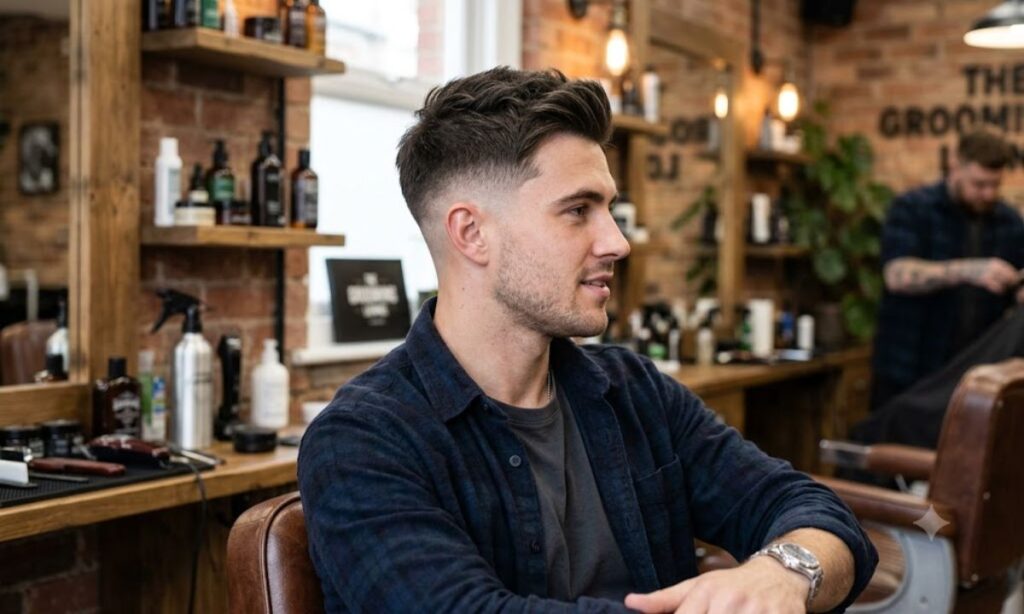
A low fade haircut keeps things subtle. The fade starts above the ear, so most of your head keeps its natural length, and only a small strip near the bottom gets the gradual treatment.
This is the safest pick for a professional setting or formal workplace. It reads as neat and controlled, never flashy, which is exactly why it’s a go to for guys who want a conservative haircut without looking dated.
If you’re nervous about a fade haircut for first-timers, start here. It’s forgiving, low drama, and easy for any barber fade haircut shop to nail on the first try.
Mid Fade Haircuts
The mid fade haircut splits the difference. Here, the fade starts at the temple, roughly halfway up the side of your head, giving you more contrast than a low fade without going loud.
It’s the most requested fade for a reason. Works in a casual office, works on weekends, works with a textured crop or a pompadour hairstyle sitting on top. Balanced is the word.
Ask any barber and they’ll tell you the mid fade vs low fade debate usually comes down to how much contrast you want people to actually notice.
High Fade Haircuts
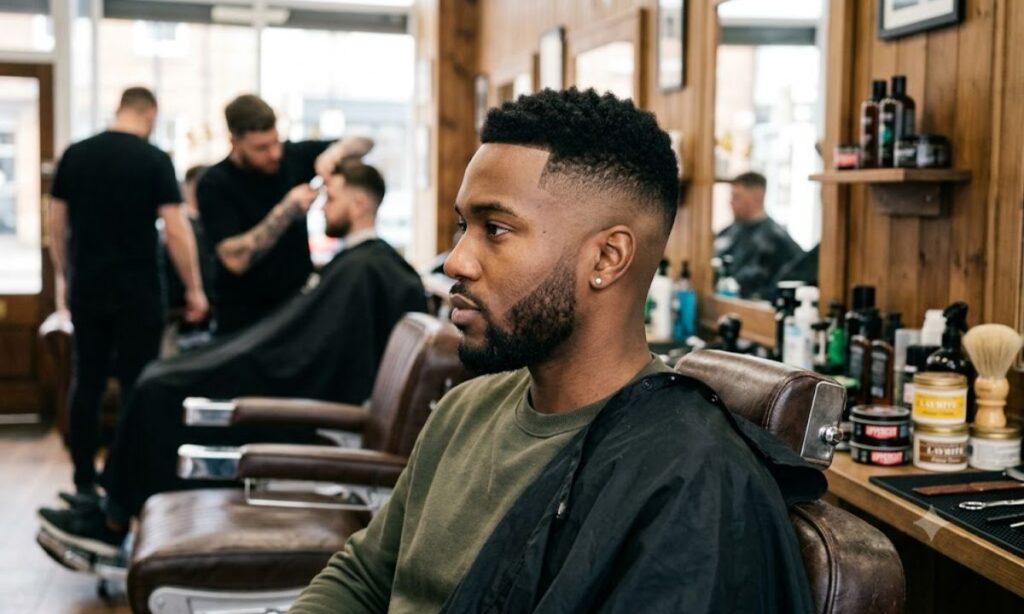
A high fade haircut brings the fade starts above the temple, climbing further up the skull before it meets your longer top hair. That means a much sharper contrast between short and long.
This is a bold fade, no way around it. It suits guys who want their haircut to make a statement, and it pairs nicely with a mohawk hairstyle or a slicked, styled top that needs the sides out of the way.
Just know it needs upkeep. A high skin fade grows out faster looking than a low one, simply because there’s more distance for regrowth to creep into.
Burst Fade Haircuts
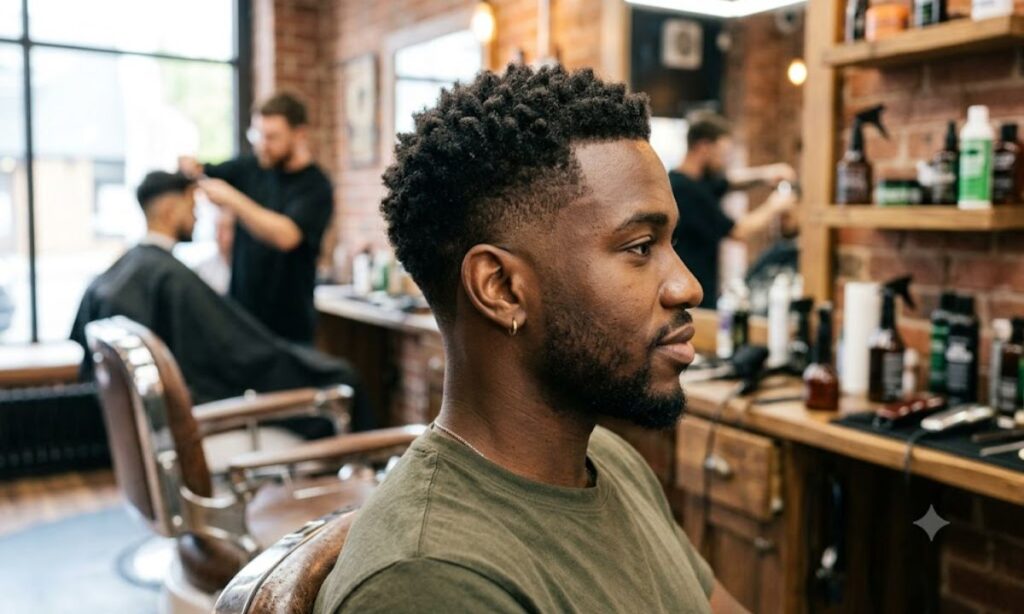
The burst fade haircut curves around the ear instead of running in a straight line across the head. Think of it as an arc around the ear, with the fade tightening right at that curve and easing off elsewhere.
It’s a favorite with fade with curly hair and fade with textured hair, because the curved shape plays nicely with natural volume up top. A burst fade mullet has also become a genuine trend, mixing a tapered curve with length left long in the back.
If you want something that doesn’t look like everyone else’s haircut, this is your lane. It’s detailed work, so pick a barber who’s actually comfortable with a curved fade.
Skin Fade (Bald Fade)
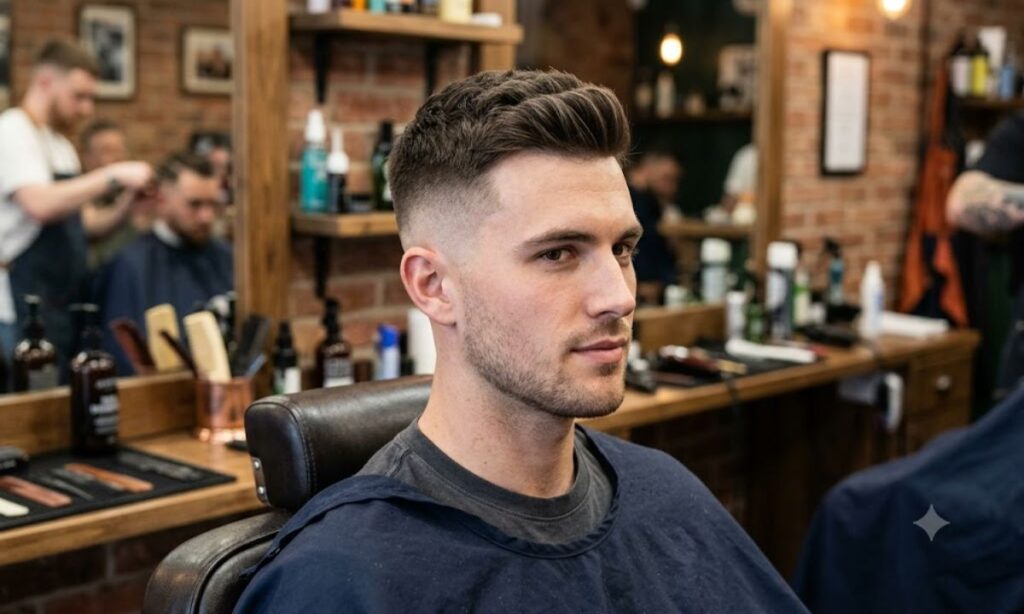
A skin fade haircut, sometimes called a bald fade haircut, pushes all the way down to a bare skin finish. There’s real scalp visibility at the bottom, and the contrast against the top is about as sharp as fades get.
This one is unforgiving on shape. Your barber needs a steady hand because there’s nowhere to hide an uneven line once skin is showing.
It also demands the shortest touch-up window of any fade. Skin grows out fast and visibly, so if you love this look, plan on frequent barber visit trips to keep it crisp.
Taper Fade Haircuts
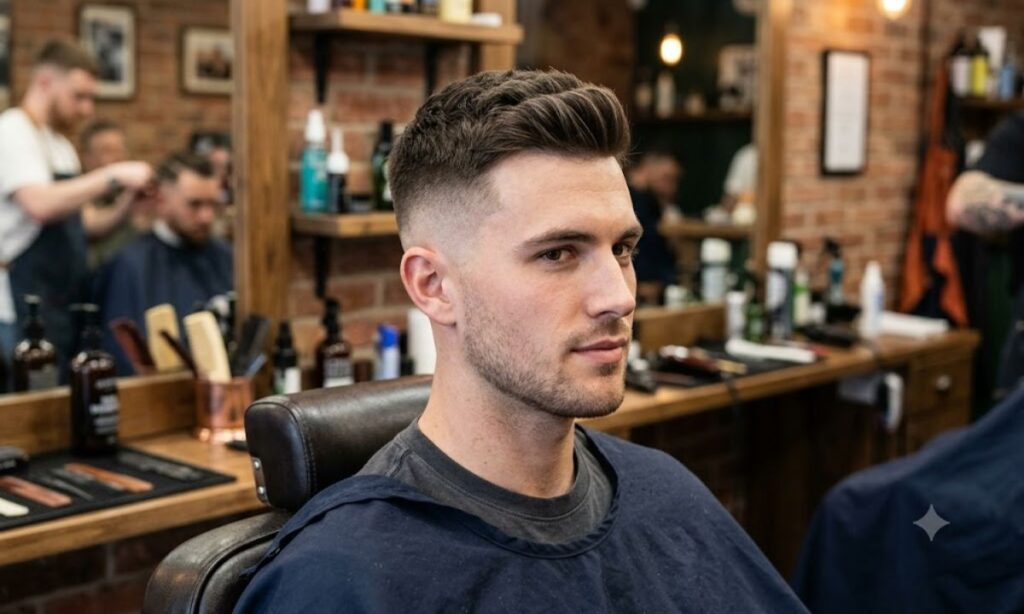
A taper fade haircut is the gentlest of the bunch. Instead of a dramatic drop, hair narrows slowly, and it usually keeps some hair remains at the neckline and around the ears rather than fading to skin.
This is where a low taper fade shines for guys who want tidy without any bold contrast at all. It’s quiet, classic, and honestly hard to mess up.
Barbershops often recommend a taper for anyone unsure what they want. It’s flexible enough to pair with a crew cut fade, a fade with comb over, or just about anything else.
Drop Fade Haircuts
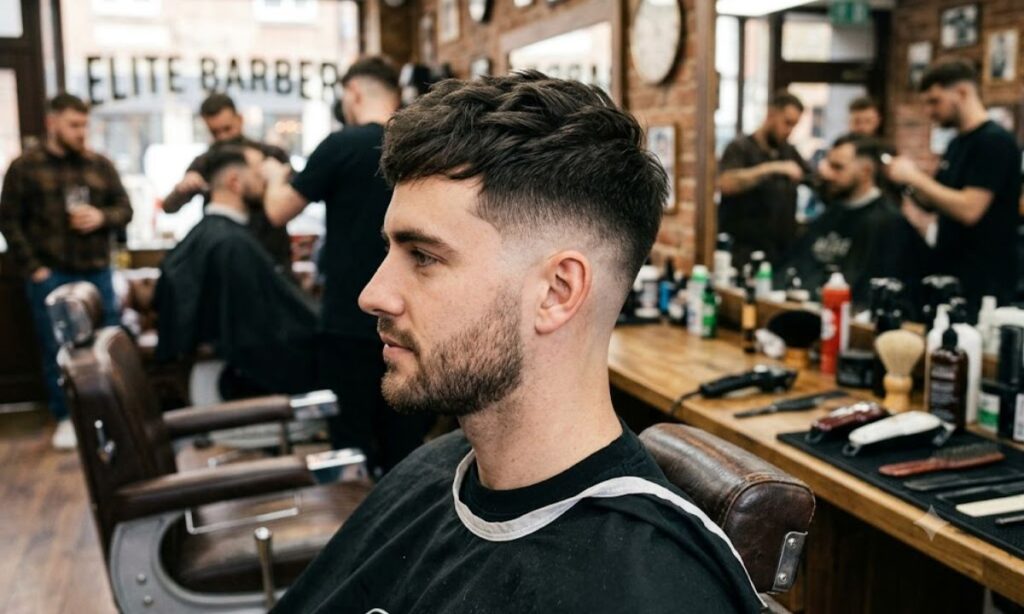
A drop fade haircut isn’t tied to height the way the others are. Instead, the fade line dips down, curved behind the ear, before rising back up toward the back of the head.
The dropped shape follows your skull’s natural curve, which is why it tends to look so clean. It adds a bit of flair without shouting for attention, and it works at any fade height, low, mid, or high.
Barbers love recommending this one for guys with a round face shape, since the downward curve near the ear can add a touch of visual length. It’s a small design choice that makes a real difference.
How Do the 7 Types Compare?
Laying them side by side makes the differences obvious fast.
- Low fade: subtlest option, minimal fade contrast, best for formal settings
- Mid fade: balanced look, moderate contrast, works almost anywhere
- High fade: sharp finish, bold statement, needs regular upkeep
- Burst fade: curved shape, great with curls and texture, more detailed cut
- Skin fade: strongest contrast, full scalp visibility, shortest grow-out window
- Taper fade: gentlest transition, classic and low-maintenance haircut
- Drop fade: curved fade line, flatters round or square faces, medium upkeep
Notice how none of these are strictly “better.” They’re tools, and the right one depends entirely on your daily life, not just what looks cool in a photo.
How Do You Choose the Right Fade?
Picking a fade isn’t really about trends. It’s about matching the cut to your routine, your job, and your hair itself.
Here’s how to think it through properly, one factor at a time.
By Maintenance Schedule
If you’re not the type to book a barber visit every two weeks, skip the skin fade. A taper fade or low fade grows out gracefully and still looks intentional weeks later.
Guys with a packed schedule usually do better with a subtle fade, simply because the grow-out period doesn’t ruin the shape as fast.
By Setting
A formal workplace calls for restraint, so lean toward a low fade or taper fade. A casual office gives you room to try a mid fade, and if your world is more relaxed than corporate, a high fade or burst fade won’t raise eyebrows at all.
Think about Monday morning, not just Saturday night, before you commit.
By Hair Density
Thick hair handles a high skin fade really well because there’s plenty of volume up top to contrast against the short sides. Fine hair or thin hair often looks better with a mid fade, since too much contrast can make thin hair look even thinner.
Curly hair, coily hair, and wavy hair all respond differently too. Fade with curly hair tends to look best with a burst fade, since the curve echoes the curl pattern instead of fighting it.
By What You’re Wearing on Top
A pompadour hairstyle or slick back hairstyle wants a high fade to show off the height. A comb over hairstyle usually pairs cleanly with a mid fade or taper fade instead.
Got a mullet hairstyle? A burst fade mullet is basically the modern default now, and for good reason. It gives you that mullet length without looking stuck in an old decade.
Hair Type and Face Shape: The Real Content Gap
Most guides skip this part, but it matters more than the fade type itself. Your face shape and hair texture decide whether a cut flatters you or just sits there.
For an oval face shape, almost anything works, so pick based on lifestyle rather than face balancing. A square face shape benefits from softer fades like a drop fade, since sharp lines can add too much edge to an already strong jaw.
Oblong face shape guys should avoid extra height on top paired with a high fade, since that combination stretches the face further. A shorter top with a low fade or mid fade keeps proportions in check.
Hair texture changes the game too. Dry hair and hair shrinkage mean curly and coily guys often see their fade “rise” visually once hair dries and shrinks up. Mentioning this to your barber ahead of time saves a lot of surprised looks in the mirror later.
How Often Should You Get a Fade?
This depends entirely on which fade you picked. A skin fade needs a touch-up window of roughly two to three weeks, because bare skin shows regrowth almost immediately.
A high fade or mid skin fade usually needs attention every three to four weeks. The taper fade and low fade, being the most forgiving, can often stretch to five or six weeks before they start looking messy.
Your own hair growth speed matters too. Some guys grow fast and need earlier trims regardless of fade type, so treat these numbers as a starting point, not a rule carved in stone.
How Do You Tell Your Barber What You Want?
This is where most bad haircuts actually happen, not in the chair, but in the conversation before it. A solid barber consultation takes two minutes and saves you weeks of regret.
Bring a reference photo. Seriously, always bring one. Words like “not too short” mean different things to different barbers, but a photo removes all the guesswork instantly.
Be specific with your barber instructions. Say where you want the fade starts at the temple or above the ear, mention if you want a straight fade or curved fade, and flag if you’re picky about the neckline cleanup or want a straight razor finish for extra sharpness.
Good barber experience comes from clear communication, not luck. The best shops will ask questions back, about your natural hair growth pattern, your hair density, and how you plan to style it day to day.
What Does a Fade Haircut Cost?
Pricing swings a lot depending on where you live and who’s holding the clippers. A fade haircut in the US typically runs somewhere between 25 and 60 dollars at a standard barbershop, though upscale spots in big cities charge more.
A fade haircut in the UK usually falls between 15 and 35 pounds, with barbershop prices climbing in London and other major cities. Skin fades and detailed burst fade haircut work often cost a bit extra since they take more time in the chair.
Tipping culture also affects the real cost, especially in the US, so factor that into your budget before booking.
You can also checkout this article as well Taper Fade vs Skin Fade: What’s The Difference?
FAQ’s
What is the easiest fade for a first-timer?
A taper fade or low fade is the safest starting point. Both are forgiving, easy for any barber fade haircut shop to execute, and they grow out without looking messy.
How much does a fade haircut cost?
Expect to pay between 25 and 60 dollars in the US, or 15 to 35 pounds in the UK, depending on your barbershop and location.
Can you do a fade at home?
A fade haircut at home is possible with clipper guards and patience, but it’s genuinely hard to get a seamless fade without practice. Most guys end up with visible lines on their first few tries.
Do all barbers know how to fade?
No, not every barber specializes in graduated haircut techniques. Ask to see their portfolio or check reviews specifically mentioning fades before booking, especially for detailed styles like a shadow fade.
What is the difference between a fade and a regular haircut?
A regular haircut usually keeps one length or uses a single guard throughout. A fade blends multiple lengths together using a blended haircut technique, so there’s a gradual hair transition instead of one flat length.
Are fades unprofessional?
Not at all. A low fade or taper fade reads as clean and put together in almost any professional setting. It’s really the height and boldness of the fade that determines how formal or casual it looks, not the fade itself.
